Swipe Right on Your Niche: The Hyper-Specific Dating Apps Rewriting America's Love Story
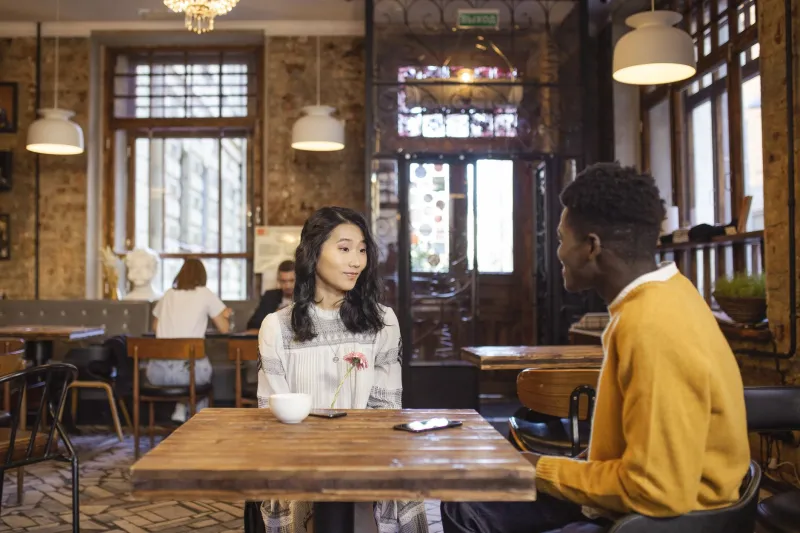
If you've ever sat through a first date where you had absolutely nothing in common with the person across from you — despite the algorithm's confident insistence that you were a great match — you already understand why niche dating apps are having a moment.
The mainstream apps aren't going anywhere. Tinder reportedly still has around 75 million users globally, and Hinge has become the go-to for millennials and older Gen Z who are technically serious about dating. But somewhere in the gaps between those giant platforms, a completely different kind of matching is happening. And it's getting specific. Very specific.
Welcome to the Era of Hyper-Specific Matching
We're talking about apps built for people who want to date other plant lovers. Apps designed exclusively for music festival fanatics. Platforms for dog owners, for people who don't drink, for outdoor adventurers, for readers, for farmers, for people who follow a particular diet. The list goes on, and it keeps growing.
Farmer's Only has been around since 2005 and now boasts millions of users across the US. BarkHappy connects dog owners. Tastebuds matches people based on music taste. Dig is specifically for dog lovers. Veggly caters to vegans and vegetarians. The Pattern pairs people based on birth chart compatibility (yes, really, and yes, it has a massive following).
The premise behind all of them is the same: shared passions and values are a better predictor of long-term compatibility than proximity and physical attraction alone.
"We kept hearing from users of mainstream apps that they'd match with someone attractive, go on a few dates, and then realize they had fundamentally different lifestyles," says Jordan Mercer, co-founder of a plant-based dating app that launched in Austin in 2022 and has since grown to over 80,000 users. "Our whole thesis was: what if we just filtered for that lifestyle alignment upfront?"
Real People, Real Stories
The proof, as they say, is in the pudding — or in this case, in the actual relationships that have come out of these platforms.
Tamika, 29, from Atlanta, had been on and off mainstream dating apps for three years with limited success. "I'm really into live music — like, I go to festivals probably six or seven times a year, and it's genuinely central to my life," she explains. "But on Hinge or Bumble, that would just be one line in my bio that most people scrolled past. It wasn't a filtering mechanism."
She joined a music-focused dating app last spring and met her current boyfriend within two months. "Our first date was literally at a show. We already had something to talk about, something to do together. It removed so much of the awkward small talk."
Then there's Marcus, 34, from Denver, who tried Farmers Only after moving from Chicago to a more rural part of Colorado. "I felt weirdly out of place on the regular apps because my lifestyle was so different," he says. "On Farmers Only, everyone gets it. You don't have to explain why you're up at 5 a.m. or why you'd rather spend a Saturday on a trail than at a rooftop bar."
He's been with his partner — someone he met on the app — for two years now.
Do Niche Apps Actually Work Better?
This is the question that comes up every time niche dating platforms get discussed, and the honest answer is: it's complicated.
Mainstream apps have the numbers advantage. More users means a bigger pool, which theoretically means more potential matches. Niche apps often have smaller, more geographically concentrated user bases, which can be a real problem if you live somewhere that isn't a major metro area.
But researchers who study relationship formation are increasingly interested in what they call "value alignment" as a predictor of relationship satisfaction. A 2023 study published in the Journal of Social and Personal Relationships found that couples who shared core lifestyle values — including hobbies, dietary practices, and social habits — reported higher long-term satisfaction than those who were matched primarily on physical attraction or surface-level interests.
Niche apps, by their very design, front-load that alignment.
"The filtering happens before you even open the app," notes Dr. Priya Sharma, a relationship psychologist based in New York who consults for several dating platforms. "When someone downloads an app specifically for, say, sober dating or outdoor adventure, they've already told you something meaningful about who they are and what they value."
The Cultural Shift Underneath the Apps
What's really interesting about the niche dating boom isn't just the technology — it's what it reveals about how Americans are thinking about love and compatibility right now.
For decades, the dominant cultural script said that love was supposed to be universal and somewhat mysterious. You met someone, felt chemistry, and figured out the rest later. The rise of online dating already challenged that by introducing algorithms and filters. But niche apps take it further: they suggest that the most important compatibility isn't about chemistry at all — it's about shared identity.
In a culture that has become increasingly tribal — where what you eat, how you spend your weekends, and what you believe about the environment can feel like core identity markers — it makes a certain amount of sense that people would want to date within their tribe.
Some people find that comforting. Others find it a little limiting.
"There's a risk of creating these really insular dating ecosystems," says Dr. Sharma. "Part of what makes relationships rich is encountering someone who challenges your worldview. If you only ever date people exactly like you, you might miss out on that."
It's a fair point. And plenty of people on mainstream apps would argue that shared values are great, but you still need that ineffable spark — the thing no algorithm can manufacture.
So Should You Download One?
If you've been grinding on the major apps and feeling like you're going through the motions, it might be worth exploring what's out there in the niche space. The barrier to entry is low — most of these apps are free or offer free tiers — and the worst case scenario is that you don't find anyone and delete it.
But approach it with realistic expectations. Niche apps aren't magic. They're a different filtering mechanism, not a guaranteed shortcut to your person. Geography still matters. Timing still matters. And the work of actually building a relationship — the communication, the compromise, the showing up — that part doesn't change no matter how good your app's algorithm is.
What they can do is give you a slightly better first conversation. And honestly, in the exhausting landscape of modern dating, that's not nothing.
The love story is getting more specific. Whether that's a feature or a bug probably depends on who you ask — and which app they're on.